

 Image 1 of 2
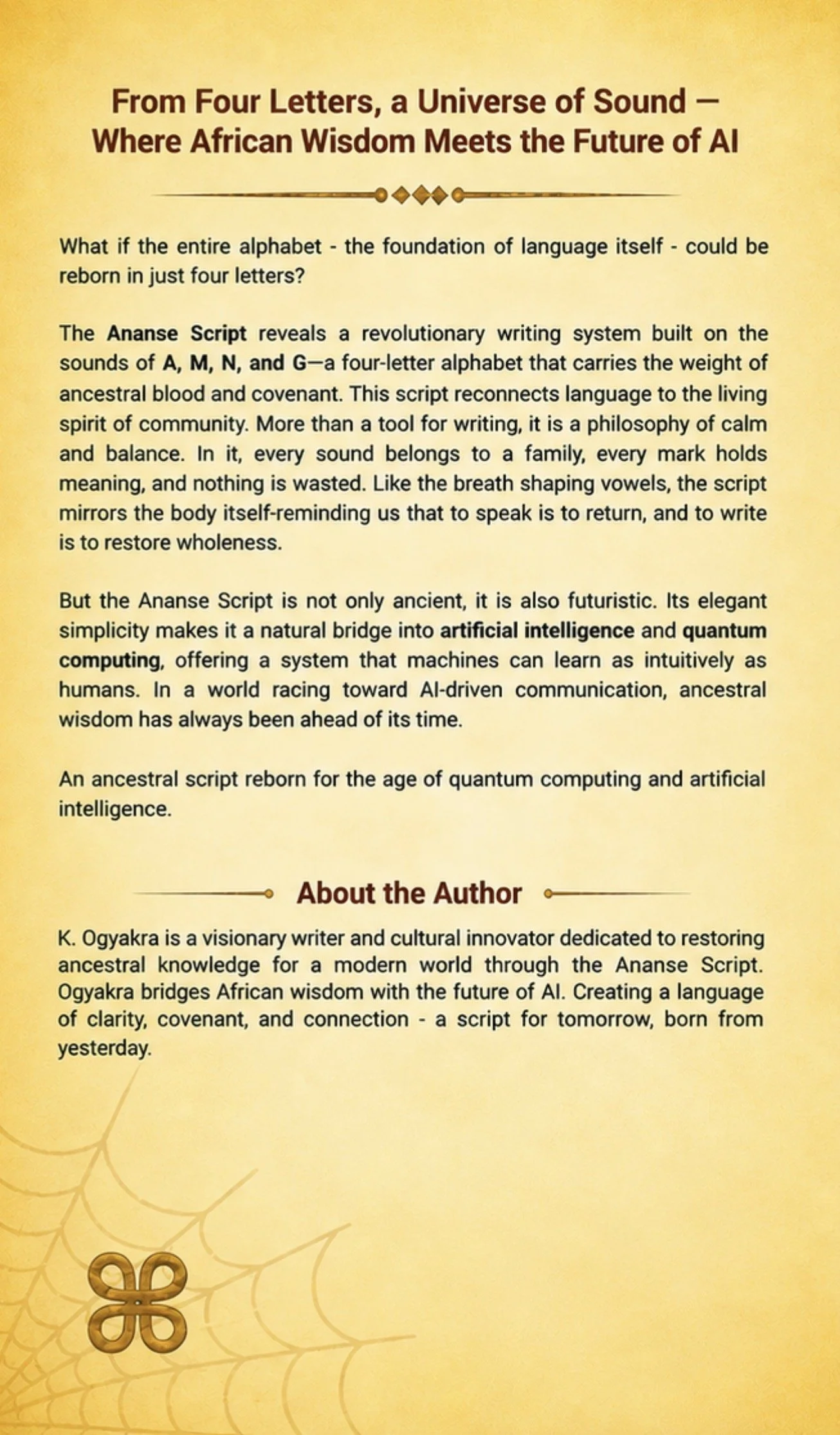 Image 2 of 2
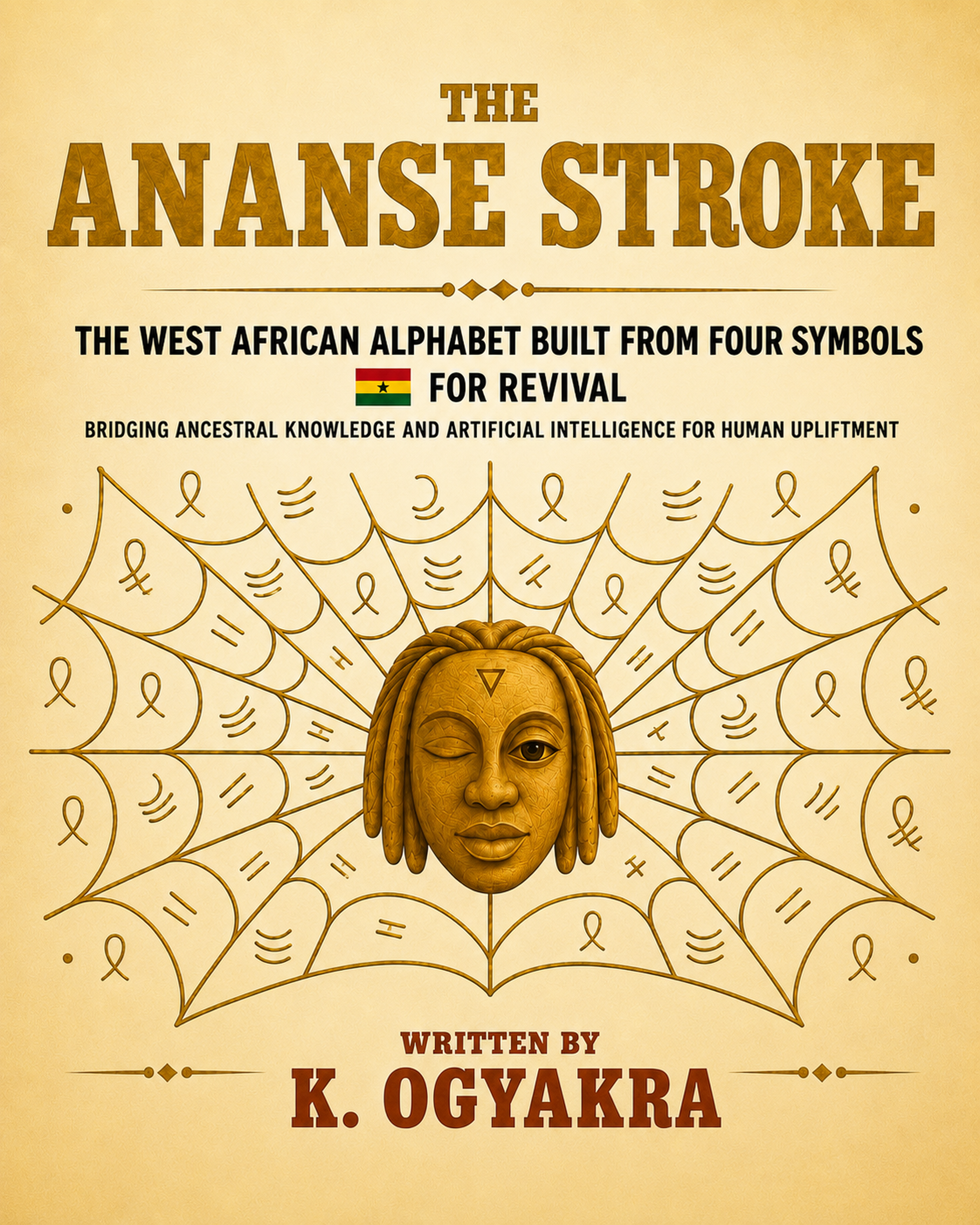
Dive deep into ancestral knowledge and artificial intelligence with the 4-letter West African alphabet
Overview The 4-letter West African alphabet is a compact writing system inspired by indigenous graphemic traditions across West Africa, simplified to four core symbols that map to phonemes, concepts, or semantic markers. When combined with ancestral knowledge—oral histories, proverbs, visual art, and ritual structures—it provides a uniquely local substrate for computational models. Integrating this alphabet into AI systems supports culturally grounded language technologies, education in local languages, and community-driven digital archives.
Why the 4-letter alphabet matters
Cultural preservation: Reducing complex colonial orthographies to a minimalist symbolic set encourages communities to reclaim encoding strategies rooted in local memory systems, symbols, and mnemonic devices.
Accessibility: A small, consistent symbol set makes it easier to design low-cost displays, tactile learning aids, and teach literacy across age ranges and varied literacy levels.
Computational tractability: For building resource-light models (on-device or community servers), a reduced alphabet lowers the dimensionality of embeddings and classification tasks, enabling robust performance with limited data.
Interoperability with art and ritual: The four symbols can be mapped to visual motifs, drumming patterns, and choreographic elements, enabling multimodal representations that resonate with ancestral knowledge systems.
Dive deep into ancestral knowledge and artificial intelligence with the 4-letter West African alphabet
Overview The 4-letter West African alphabet is a compact writing system inspired by indigenous graphemic traditions across West Africa, simplified to four core symbols that map to phonemes, concepts, or semantic markers. When combined with ancestral knowledge—oral histories, proverbs, visual art, and ritual structures—it provides a uniquely local substrate for computational models. Integrating this alphabet into AI systems supports culturally grounded language technologies, education in local languages, and community-driven digital archives.
Why the 4-letter alphabet matters
Cultural preservation: Reducing complex colonial orthographies to a minimalist symbolic set encourages communities to reclaim encoding strategies rooted in local memory systems, symbols, and mnemonic devices.
Accessibility: A small, consistent symbol set makes it easier to design low-cost displays, tactile learning aids, and teach literacy across age ranges and varied literacy levels.
Computational tractability: For building resource-light models (on-device or community servers), a reduced alphabet lowers the dimensionality of embeddings and classification tasks, enabling robust performance with limited data.
Interoperability with art and ritual: The four symbols can be mapped to visual motifs, drumming patterns, and choreographic elements, enabling multimodal representations that resonate with ancestral knowledge systems.